

What Is a Dental Services Organization (DSO)?
The business side of running a dental practice has become increasingly complex. Dentists must manage employees, technology, billing, compliance, marketing, purchasing, and other administrative responsibilities while continuing to provide excellent patient care. A Dental Services Organization, commonly called a DSO, can provide business and administrative support that allows dental professionals to focus more attention on clinical dentistry.
At Progressive Dental Concepts, we believe understanding the DSO model can help dentists and dental teams make informed decisions about the future of their practices.
What Does DSO Mean in Dentistry?
 A Dental Services Organization provides non-clinical business support to dental practices. Depending on the organization and its structure, these services may include accounting, human resources, marketing, technology, purchasing, billing, scheduling support, and other administrative functions.
The specific relationship between a DSO and an individual dental practice can vary significantly. Some organizations provide centralized services across a large network, while others develop partnerships designed around the needs and culture of individual practices.
The basic goal is to create operational support that helps dental practices function efficiently.
What Services Can a DSO Provide?
Running a successful dental practice involves many responsibilities that have little to do with treating patients. A DSO may provide support in areas such as:
- Human resources and employee benefits
- Accounting and financial reporting
- Billing and revenue cycle management
- Marketing and patient communications
- Information technology
- Purchasing and vendor relationships
- Recruiting and staff development
- Scheduling and administrative systems
- Business planning and practice growth
Centralizing some of these functions can reduce the administrative workload placed on dentists and individual practice teams.
Why Do Dentists Consider Joining a DSO?
One of the primary reasons dentists explore a DSO partnership is the opportunity to spend less time managing business operations.
Practice ownership can be rewarding, but administrative responsibilities can consume significant time. Access to experienced business professionals and established systems may allow dentists to concentrate more heavily on patient care and clinical leadership.
A DSO may also provide economies of scale. A group of practices may have greater purchasing power, access to shared technology, recruiting resources, and specialized expertise than an individual practice could maintain independently.
Does a DSO Control Clinical Dentistry?
An important distinction in understanding the DSO model is the difference between clinical care and business support.
DSOs are generally structured to provide non-clinical administrative and management services. Dentists remain responsible for clinical decisions and patient treatment in accordance with applicable professional and legal requirements.
The exact structure, however, varies among organizations. Dentists considering a DSO relationship should carefully understand how clinical autonomy, practice operations, compensation, ownership, and decision-making are addressed.
Are All Dental Service Organizations the Same?
No. DSO models can differ considerably.
Some organizations operate large networks with highly standardized systems. Others emphasize partnerships with established practices and seek to preserve local identity, existing teams, and practice culture.
For dentists considering a DSO, evaluating the organization’s philosophy is just as important as reviewing the financial terms.
Ask how the organization approaches clinical autonomy, staffing, technology, practice branding, growth, and long-term relationships with doctors.
Is a DSO Partnership Right for Your Dental Practice?
There is no single business model that is right for every dentist. A DSO partnership may appeal to practice owners seeking administrative support, growth opportunities, succession planning, or relief from some of the responsibilities associated with running a business.
The right relationship should support both the business health of the practice and its commitment to excellent patient care.
Progressive Dental Concepts works to support successful dental practices while recognizing the importance of strong doctor leadership and quality patient care. If you are exploring the DSO model or considering the future of your dental practice, learning how different partnership structures work is an important first step.

 While you focus on clinical care, a DSO handles non-clinical operations. These services often include billing, marketing, HR, accounting, compliance, and procurement.
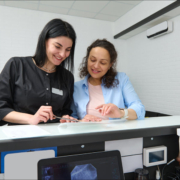
 One of the key benefits of a DSO partnership is that clinical decisions remain with the dentist. Treatment planning, patient relationships, and professional judgment are not dictated by the organization. Dentists maintain full responsibility for care while the DSO manages non-clinical operations. This model protects the integrity of the profession while relieving business pressure.

 DSOs often purchase advanced equipment for their practices, including intraoral scanners, digital radiography, and milling machines for same-day crowns. These technologies improve diagnostic accuracy, streamline procedures, and enhance patient outcomes. Without DSO support, many dentists would struggle to afford such upgrades.

 DSOs handle scheduling, billing, and insurance management. Reduced administrative workload increases available time for patient care. Professional staff manages patient intake, payment processing, and insurance claims. DSOs reduce scheduling conflicts and improve patient flow. Professional billing increases cash flow and reduces outstanding accounts. Centralized management reduces paperwork and operational stress. Reduced workload increases work-life balance and professional satisfaction. Professional support increases office efficiency and appointment consistency. Reduced stress increases focus on complex cases and patient care quality. DSOs improve operational consistency and patient satisfaction. Selling to a DSO increases practice efficiency and reduces administrative burden. Professional support increases confidence and clinical focus.

 DSOs handle insurance verification and billing. Professional staff reduces coding errors and claim rejections. Centralized billing increases payment consistency and reduces processing time. DSOs negotiate higher reimbursement rates with insurance providers. Professional oversight ensures accurate billing and payment tracking. Faster claim processing increases cash flow and operational stability. DSOs monitor outstanding payments and reduce overdue accounts. Reduced billing errors increase financial accuracy and revenue consistency. Professional care improves patient invoicing and payment collection. Stronger cash flow increases practice profitability and financial strength. Reduced billing burden increases focus on patient care. DSOs improve billing efficiency and financial consistency.

 PDC provides business training and practice management support. Their team teaches dentists how to handle scheduling, billing, and insurance. Professional guidance improves financial planning and revenue management. PDC’s experts teach dentists how to increase patient retention and case acceptance. Business coaching improves operational efficiency and practice profitability. PDC helps dentists create long-term growth strategies. Professional monitoring improves cash flow and expense control. Stronger financial performance increases practice value and operational stability. PDC’s team provides training on staff management and patient scheduling. Professional business guidance increases confidence in operational decisions. Improved business management increases overall practice strength. Stronger business performance increases long-term career success and practice stability.

 At PDC, mentorship plays a key role in shaping the careers of young dentists. Experienced practitioners work closely with new dentists, and sharing valuable insights. Likewise, they guide complex clinical decisions, and provide real-world advice that goes beyond textbooks. This mentorship not only improves clinical skills but also helps young dentists build the confidence and problem-solving abilities needed to manage diverse cases effectively. Under the guidance of seasoned mentors, young dentists gain invaluable hands-on experience. They learn how to communicate effectively with patients, deliver high-quality care, and address challenging situations with professionalism.

 Working with a DSO offers young and mid-career dentists access to mentorship from more experienced practitioners. Through mentorship, less-experienced dentists gain practical knowledge that expands their clinical skills, boosts their confidence, and enhances their treatment planning abilities. Seasoned practitioners can offer insights into managing complex cases, avoiding common pitfalls, and achieving optimal patient outcomes, which is especially beneficial for dentists just starting out.